




Agricultural robotics are often framed as a future story. Autonomous machines. AI-powered farms. Labor-free production. The problem is that agriculture doesn’t operate in the future. It operates in the mud, the heat, and the dust. Enter Dusty Reynolds and Bird’s Eye Robotics.
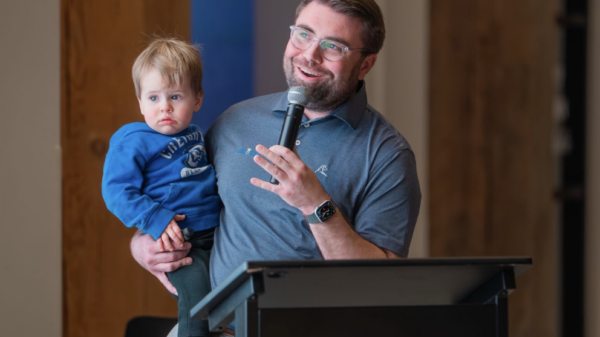
Bird’s Eye Robotics is compelling precisely because it wasn’t built as a futuristic promise. It was built as a response to messy reality. And that mindset traces directly back to its founder, Dusty Reynolds, whose earlier entrepreneurial work reveals a consistent pattern: build tools that help real operators make better decisions, faster, inside imperfect systems.
A Founder Pattern: Build Tools for Messy Reality
Dusty Reynolds’ companies don’t start with grand technological ambition. They start with observation.
Before Bird’s Eye Robotics, Reynolds was a founder of RaceNote, a software platform born from time spent around motorsports teams. Race teams, like farmers, operate in high-pressure, data-heavy environments. They take pages of handwritten notes. They track weather, performance, setups, and small adjustments that compound into wins or losses. And for a long time, much of that information lived in binders, notebooks, and people’s heads.
RaceNote didn’t try to reinvent racing. It simply asked: what if this mess were structured just enough to help people make better decisions, quicker?
That instinct, to reduce friction in real workflows is the through-line into Bird’s Eye Robotics.
From Racetracks to Poultry Barns
At first glance, motorsports software and agricultural robotics seem worlds apart. But operationally, they rhyme.
Poultry production happens in environments that are difficult by design. Broiler barns are dark. They’re dusty. They’re crowded. They’re biologically variable. And they run on tight margins where labor shortages and small inefficiencies ripple quickly into animal welfare and profitability problems.
Bird’s Eye Robotics didn’t begin with the goal of “building a robot.” It began with a more grounded question: how do we reduce the burden of repetitive, low-value labor while increasing the quality of decisions farmers can make?
The answer wasn’t a flashy, fully autonomous future farm. It was a barn-ready robotic system that could navigate harsh conditions, collect bird’s-eye data, and generate insights that actually fit into how poultry operations run today.
Robotics in agriculture is fundamentally about resilience and reliability. Products must work in tough environments – particularly during the most challenging weather and busiest weeks of the year. Bird’s Eye’s focus on reliability, perception, and actionable data reflects a founder who understands that constraint deeply.
Why Nebraska’s Ecosystem Mattered
Participation in The Combine, Nebraska’s ag-focused incubator run by Invest Nebraska, forced Bird’s Eye to validate assumptions instead of polishing pitch decks. The program emphasizes customer discovery, operational fit, and whether a solution actually earns its place in a producer’s workflow.
That pressure is healthy, especially for hardware and robotics companies. Hardware mistakes are expensive. Misaligned features linger for years. The Combine’s model pushes founders to learn quickly whether they are solving a problem farmers will pay to have solved.
Invest Nebraska’s involvement also reflects a broader Midwest pattern: capital paired with ecosystem-building. Not just funding, but access to networks, credibility, and the slower, steadier path that ag-tech often requires.
SBIR: The Unsexy Bridge That Makes Ag Robotics Possible
If venture capital rewards speed, SBIR rewards substance.
Bird’s Eye Robotics’ USDA/NIFA SBIR grant played a critical role in bridging the gap between idea and deployment. Agricultural robotics doesn’t scale like software. You can’t brute-force your way through dust, lighting variation, animal behavior, and biosecurity concerns with code alone.
SBIR funding allowed Bird’s Eye to do the unglamorous work:
- Field testing in real barns
- Computer vision development under poor lighting
- Mechanical systems designed for dirty, constrained environments
Just as importantly, it allowed this work to happen without premature dilution or unrealistic growth pressure. SBIR aligns well with ag-tech precisely because it recognizes that early technical risk often serves public good outcomes, such as productivity, animal welfare, and food system resilience, before it serves venture returns.
For Bird’s Eye, SBIR wasn’t a detour from commercialization. It was a prerequisite for it. This is a typical story for many SBIR companies. It acts as a means to ensure that the companies are fully vetted and tested in real world environments.
Robotics That Respect the Human System
One of the most revealing things about Dusty Reynolds is how often he emphasizes people over technology.
Across interviews and talks, a recurring theme emerges: treat humans like humans. Connect. Respect how work actually gets done. He has long been one of the keystones of the Omaha/Lincoln ecosystem as a builder, founder, and connector.
That philosophy shows up in Bird’s Eye’s approach to robotics. The goal isn’t to remove farmers from the system, t’s to elevate them. To shift time away from monotonous observation and toward higher-quality decisions. To give producers better visibility without demanding radical operational change.
In agriculture, technology that ignores human reality fails quietly. Bird’s Eye’s success so far suggests a different path: robotics as augmentation, not replacement.
The Long View on Ag Robotics
Bird’s Eye Robotics doesn’t fit neatly into the hype cycle of autonomous everything. And that’s a strength.
Its story is slower, more disciplined, and more instructive:
- A founder who repeatedly builds tools for messy environments
- An ecosystem that rewards validation over vision alone
- Public funding that bridges technical risk responsibly
- A product philosophy grounded in trust, reliability, and adoption
Agriculture doesn’t need more futuristic promises. It needs companies that understand that progress is incremental, seasonal, and deeply human.
Bird’s Eye Robotics — and the entrepreneurial arc of Dusty Reynolds — offers a useful reminder: the most durable innovation often comes from founders who are willing to stand in the dust, watch carefully, and build exactly what reality demands.